As these lines are being written, the world waits apprehensively to see where the heated conflict between Israel and the United States on one side, and Iran on the other, will lead. It is a conflict into which the countries of the Gulf region have been thrust through no choice of their own. Nevertheless, these same states now find themselves bearing security, political and economic burdens which, in some respects, may exceed those being borne by the parties to the conflict.
The United States has largely allowed its actions to be dictated by the Israeli agenda, playing a supporting role in Israel’s conflict with Iran. And for its part, Iran has resorted to the use of energy as its principal means of leverage to stop the broad-ranging military assault being waged against it, and perhaps as a means of deterrence by asserting its ability to wield energy as an effective weapon in the face of any future threat. Given the fact that energy represents the nerve centre of the global economy, its use in this context is bound to have widespread effects, even if this comes at the expense of the security and stability of neighbouring countries which have adopted moderate stances towards Iran.
Iran has managed to produce a massive upheaval in the global energy system, the likes of which have not been witnessed for decades. The current situation may stand as one of the severest and most profoundly impactful crises this vital sector has endured since the early 1970s. Moreover, Iran may not yet have appreciated the strategic cost of its actions, which have sparked the rage of neighbouring states, while eroding trust in the possibility of establishing any meaningful political, economic, or even humanitarian cooperation with it in the future.
I: The global energy sector faces a true test of resilience
Despite the major transformations the world has witnessed over the past two decades, particularly in the expansion of alternative energy resources and the development of technologies for their production and efficiency, the global economy has not yet managed to free itself from its reliance on the hydrocarbon sector, which remains the key entry point for the production of most commodities and the provision of crucial services, as well as a fundamental pillar of fiscal, monetary and even social policies.
Nearly two weeks since the outbreak of the US-Israeli war on Iran, during which time the world has seen Iran’s response strategy unfold, the losses to the global energy sector have deepened by the day, while the prospects for its recovery, even after the war ends, appear dismal. One notes an absence of precise information about the extent of the damage that has been sustained by oil and gas production capacities, whether in the states that have come under Iranian attack, or in Iran itself, whose oil facilities and fields have been targeted by numerous strikes, most notably the facilities associated with the south Pars gas field.
At this point, the principal challenge facing countries that import oil, gas and their derivatives is no longer simply prices but, in addition, the availability of supplies, which is undoubtedly the principal factor driving the rapid price rises. Asian countries are the most directly impacted in this context. China, India, and Japan together account for nearly 80 percent of the oil that passes through the Strait of Hormuz, which in turn accounts for nearly half of East Asia’s oil imports.[1] This, of course, explains why these states have resorted to political and diplomatic channels with the Iranians to obtain the needed guarantees that their shipments will continue to be allowed through the strait. These same countries have not expressed any willingness to become involved in the military conflict or to provide military protection for their tankers despite the fact that they are the countries most impacted by the restrictions on shipping through the strait, which reflects the delicate balance they must maintain between economic interests and geopolitical considerations.
II: Urgent measures to deal with the shortage of supplies
The energy situation in Asia looks quite bleak, as a number of countries there face real challenges in securing energy supplies, prompting them to take direct measures to cope with the growing shortage. In the Philippines, the official work week has been reduced to four days in order to reduce governmental energy consumption by roughly one-fifth, along with directing employees to turn off their computers during breaks. Vietnam has called on its workers to work remotely, while the prime minister of Thailand is urging officials to use stairs rather than elevators. In the same context, many countries have resorted to imposing restrictions on fuel consumption and directing limited energy supplies to vital sectors, primarily hospitals.
At a time when the matter of securing energy supplies is being prioritized in countries most reliant on hydrocarbon resources going through the Strait of Hormuz, many of the world’s economies are facing mounting challenges related to the rising cost of importing energy and the pressures this brings to bear on balances of payments, not to mention their direct implications for standards of living, particularly in countries where the cost of living is already high.
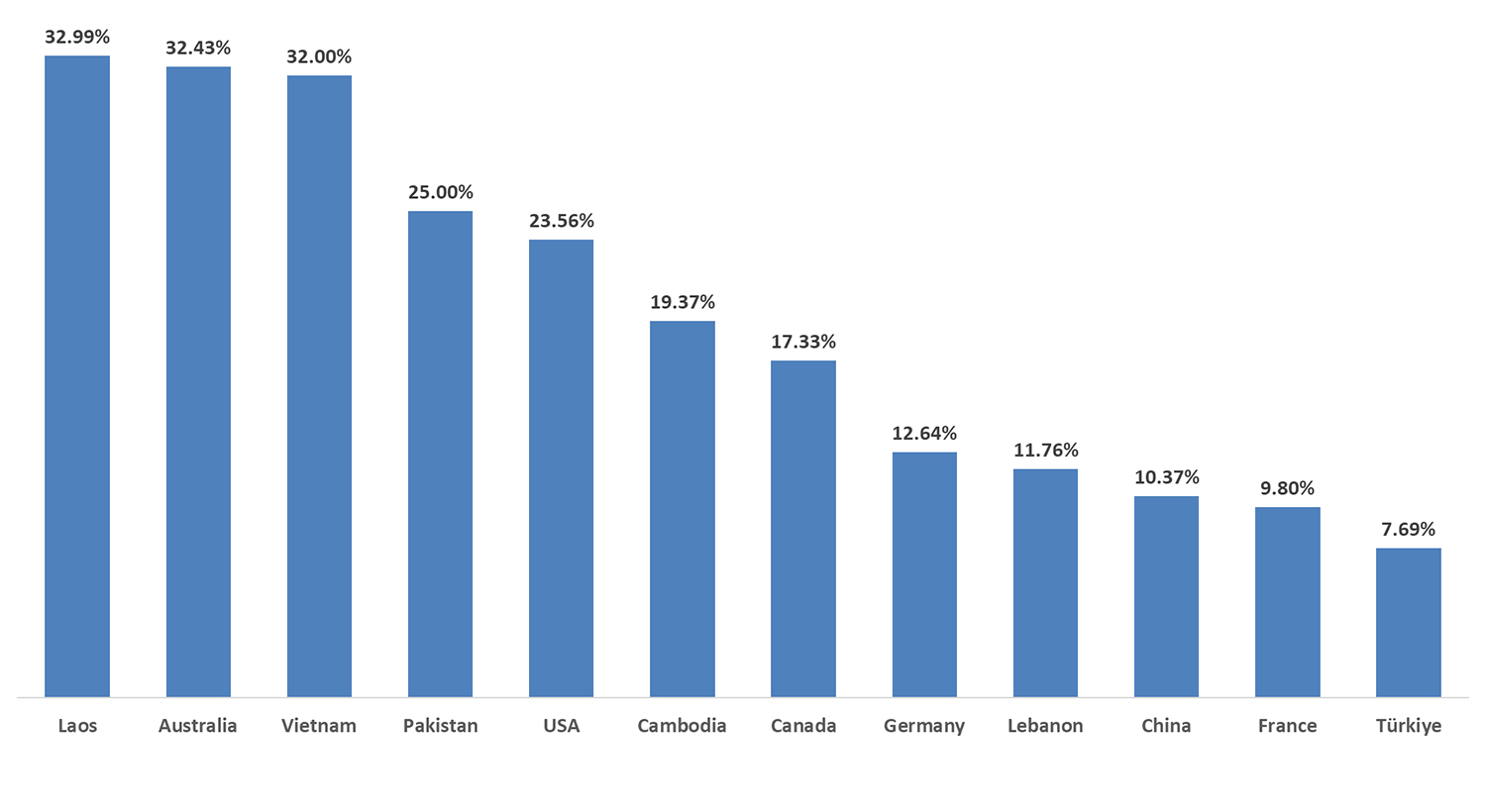
Countries that rely on market mechanisms to determine energy costs, whether in the form of fuel or electricity, are witnessing waves of price rises whose ceilings are hard to predict. The reason for this is that oil prices are subject to continuously escalating pressures, as oil is increasingly used as a tool within the current conflict. This reality is reflected in noticeable rises in fuel prices in countries around the world. Such rises have exceeded 30 percent in countries such as Laos, Australia and Vietnam; they have fluctuated between 20 and 25 percent in the United States of America and Pakistan; and increases of over 10 percent have been recorded in countries such as China, Lebanon, Germany, Canada and Cambodia. These rises are slated to continue in light of recent hikes in oil prices, and possibly at a more rapid pace if the oil sector continues to be targeted as one of the central focal points of the ongoing conflict.
Data from the European Commission’s weekly oil bulletin show notable increases in the price of 95-octane gasoline during the period from February 23 to March 9, 2026, particularly in Germany and Austria. In Germany, prices rose from approximately €1.82 to €2.07 per litre, an increase of nearly 14 percent; Austria witnessed a similar rise from €1.51 to €1.71 per litre, an increase of approximately 13 percent. Finland also recorded a significant increase, with prices rising from around €1.71 to €1.93 per litre, bearing in mind that Finland’s fuel prices are among the highest in Europe due to high taxation.[2]
In the face of such repercussions, German Minister of Economy Katharina Reiche has proposed legislation aimed at regulating the rise in fuel prices. Modelled after the Austrian experience, the plan would allow gas stations to raise prices only once a day – at 12:00 noon – with the possibility of lowering prices at any time. However, this legislation has not yet gone into effect given the need to first amend Germany’s competition laws. Meanwhile, Austria has gone further, allowing operators to raise prices only three times a week, while permitting price reductions at any time.[3]
Fuel price increases in several countries around the world
(February 23 - March 16, 2026)
Source: “Gasoline Prices, Liter, 16-Mar-2026,”
Global PetrolPrices.com, accessed on 19/3/2026, at:
https://acr.ps/1L9Baao.
III: Inflation resurfaces as a key global challenge
Just as global economies, particularly the United States, had begun to breathe a sigh of relief after years of battling inflation, finally managing to contain their upward trajectories and stabilize them at relatively acceptable levels, they were hit by the repercussions of the US-Israeli war on Iran, which has taken the energy sector hostage to decide the battle. Add to this the issues now faced by the energy sector, including a major decline in supplies due to restrictions on exports through the Strait of Hormuz, soaring prices, and uncertain prospects for recovery in the coming months and years, and you have a situation that augurs the world’s entry into a new pricing phase. According to Saad bin Sherida Al-Kaabi, CEO of Qatar Energy, the Iranian attacks have disrupted approximately 17 percent of Qatar's liquefied natural gas (LNG) export capacity, threatening supplies to Europe and Asia. Estimating the annual losses at around $20bn, Al-Kaabi explained that the attacks had damaged two out of 14 liquefied natural gas (LNG) production trains, as well as one of two gas-to-liquids (GTL) facilities, noting that repairs would disrupt approximately 12.8 million tons of annual LNG production for a period of three to five years.[4]
In light of the foregoing, the world faces two distinct types of challenges. The first consists of immediate, direct challenges linked to the repercussions of the armed conflict with their intense impacts, particularly the disruption of supplies and sharp rises in energy prices. However, these challenges remain tied to the duration of the military conflict itself, which may not extend for a prolonged period of time given its exorbitant security and economic costs. As for the second type of challenge, it takes the form of intermediate and long-rang tests which, though less acute than the current repercussions, are more complex in terms of their geopolitical and technical dimensions. Production facilities for oil, gas, and their derivatives are expected to operate at levels lower than those observed before the outbreak of the war, while an additional factor to consider is the potentially greater geographical scope of any future conflict, which could expose energy supply chains to similar or even worse disruptions. In any event, it is highly probable that, for several months, and possibly even years, the world will face energy prices that exceed those of the past few years. Such a situation will lead to mounting inflationary pressures, dispelling hopes of bringing down interest rates, and even prompting central banks to adopt more stringent monetary policies.
Given escalating geopolitical turmoil and the disruption of global supply chains amidst the heated military conflict, rising global energy prices are poised to slow the pace of global economic growth. According to a study conducted by Oxford Economics, if average global oil prices approached $140 per barrel and remained at that level for two months, this could push parts of the global economy into a moderate recession driven by contractions in the Eurozone, the United Kingdom, and Japan. Meanwhile, the US economy is nearing a temporary recession accompanied by rising unemployment rates. Global inflation rates are projected to rise, peaking at approximately 5.8 percent. Assuming a milder scenario in which average oil prices approached $100 per barrel, the impact would be limited to slowed global economic growth due to rising inflation rates, yet without a full-blown recession.[5]
IV: The Arab Gulf states may suffer the greatest economic loss
For the first time in many years, the oil-exporting Arab Gulf states stand to suffer major losses due to the current security and geopolitical turmoil. Despite the significant surge in the prices of oil, gas, and their derivatives since the military assault on Iran by the United States and Israel, the Gulf states have been sustaining financial losses due to a major decline in their exports. Iran has chosen to designate oil and gas fields, along with facilities for producing their derivatives, as prime targets – again, without these states having played any role in fuelling this conflict. Iran may have calculated that by introducing global energy security into the geopolitical equation, it could achieve strategic and tactical gains, wagering that the challenges faced by this sector would provide sufficient reason to halt the aggression against it and prevent any military assault of this scope in the future – assuming, of course, the absence of any other political objectives rooted in the Iranian regime’s military doctrine.
Iran has succeeded in creating such a profound disruption in the global energy system that, according to a statement by the Director of the International Energy Agency, this conflict has precipitated a major global energy crisis and caused the greatest supply disruption in the history of the global oil market. Both theoretical considerations and facts on the ground suggest that the Arab Gulf states, including Iraq, will be unable to compensate for the shortfall in hydrocarbon exports passing through the Strait of Hormuz. Approximately 20 percent of global oil supplies, nearly 80 percent of which reaches Asian markets,[6] is transported through the Strait of Hormuz, along with a nearly equal percentage of the world’s supply of liquefied natural gas (LNG).[7]
Today, Saudi Arabia and the United Arab Emirates have no choice but to export limited quantities of oil via pipelines reaching ports situated outside the Strait of Hormuz. Saudi Arabia’s East-West Pipeline – which extends to Yanbu on the Red Sea – has a capacity of around 5 million barrels per day, while the pipeline that runs from Abu Dhabi to Fujairah along the Arabian Sea has a capacity of about 1.5 million barrels per day. Even when operating at full capacity, these routes can cover only about one-fourth of the volume that generally passes through the Strait of Hormuz, not to mention the fact that these pipelines remain vulnerable to attacks by Iran and the Houthis in Yemen. The latter group has yet to engage directly in the current escalation, but their involvement could disrupt Saudi oil exports from Yanbu to Asian markets.[8] Against this bleak backdrop, the situation appears even more dire for the other oil-exporting nations that rely on the strait, particularly Kuwait, Iraq, and Bahrain, which lack any effective alternative routes for their oil exports.
In light of the logistical and security considerations surrounding the Strait of Hormuz, the Arab Gulf states' reliance on the strait for their oil exports, and the decline in their export capacity (with the volume of oil exports through the strait having declined by nearly 70 percent), the costs incurred by these states as a result of the disruption to transit through the strait are estimated at approximately $23 billion since the war began three weeks ago.[9] This figure is slated to rise steadily for as long as the conflict and its attendant geopolitical and logistical repercussions continue. Moreover, this cost approaches the military expenditures incurred by the United States which, according to the US Department of Defense, came to nearly $11.3 billion during the first six days of the war alone.[10] In fact, it is likely to have exceeded the US military expenditures if one factors in the direct and indirect impacts across the Gulf states’ various production and service sectors.
However, the most profound and far-reaching costs may only be revealed once the conflict has ended and the full extent of the damage inflicted on oil fields and other energy-related facilities comes to light, bearing in mind that it may take years for such assets to be restored to their previous production levels. These realities may exert prolonged pressure on global energy prices, enabling countries in the region to recoup some of their losses – provided, that is, that this rise in prices coincides with a gradual improvement in production capacities. Meanwhile, indirect economic impacts will depend on the extent to which the Gulf states modify their economic agendas and the impact of such modifications on their ability to attract investment, in addition to their potential involvement in arms races that could drain financial resources and place strain on the funding of other economic and social priorities.
[1] Fadhilah Alshahab, “Is Asia’s Energy Lifeline on the Line Due to Tensions in the Strait of Hormuz?”
Euronews, 17/3/2026, accessed on 19/3/2026, at:
https://acr.ps/1L9Bal1.
[2] “Gasoline Prices, Liter, 16-Mar-2026,”
Global PetrolPrices.com, 16/3/2026, accessed on 19/3/2026, at:
https://acr.ps/1L9Baao.
[3] Tamsin Paternoster, “War in Iran: Where in Europe Have Petrol Prices Spiked?”
Euronews, 19/3/2026, accessed on 19/3/2026, at:
https://acr.ps/1L9B9LG.
[4] “What We Know about Attacks on Key Energy Sites Across the Middle East,”
CBC News, 19 /3/2026, accessed on 19/3/2026, at:
https://acr.ps/1L9B9S3.
[5] “Iran Conflict: Iran War Scenarios: The Oil Price That Breaks Parts of the Economy,”
Research Briefing, Oxford Economics, 13/3/2026, accessed on 20/3/2026, at:
https://acr.ps/1L9B9sA.
[6] Lutz Kilian, Michael Plante & Alexander W. Richter, “What the Closure of the Strait of Hormuz Means for the Global Economy,” Federal Reserve Bank of Dallas, 20/3/2026, accessed on 21/3/2026, at:
https://acr.ps/1L9B9Yp.
[7] “Strait of Hormuz,”
Factsheet, International Energy Agency (IEA), February 2026, accessed on 21/3/2026, at:
https://acr.ps/1L9Bad4.
[8] David Butter, “The Iran War Is Exacting a Heavy Toll on Gulf Oil and Gas Exporters—and Creating Risk and Opportunity in North Africa,”
Chatham House, 17/3/2026, accessed on 21/3/2026, at:
https://acr.ps/1L9B9uQ
[9] This estimate was prepared based on the volume of hydrocarbon exports from these countries throughout 2025, and on the expected rates of decline in daily exports in light of the security and logistical considerations now surrounding the Strait of Hormuz.
[10] Mark F. Cancian & Chris H. Park, “Iran War Cost Estimate Update: $11.3 Billion at Day 6, $16.5 Billion at Day 12,” Center for Strategic and International Studies (CSIS), 13/3/2026, accessed on 21/3/2026, at:
https://acr.ps/1L9B9mP.
References Alshahab, Fadhilah. “Is Asia’s Energy Lifeline on the Line Due to Tensions in the Strait of Hormuz?” Euronews, 17/3/2026. Butter, David. “The Iran War Is Exacting a Heavy Toll on Gulf Oil and Gas Exporters - and Creating Risk and Opportunity in North Africa.” Chatham House. 17/3/2026. Cancian, Mark F. and Chris H. Park. “Iran War Cost Estimate Update: $11.3 Billion at Day 6, $16.5 Billion at Day 12.” Center for Strategic and International Studies (CSIS). 13/3/2026. “Gasoline Prices, Liter, 16-Mar-2026,” Global PetrolPrices.com, 16/3/2026. “Iran Conflict: Iran War Scenarios: The Oil Price That Breaks Parts of the Economy.” Research Briefing. Oxford Economics. 13/3/2026. Kilian, Lutz, Michael Plante and Alexander W. Richter. “What the Closure of the Strait of Hormuz Means for the Global Economy.” Federal Reserve Bank of Dallas. 20/3/2026. Paternoster, Tamsin. “War in Iran: Where in Europe Have Petrol Prices Spiked?” Euronews, 19/3/2026. “Strait of Hormuz.” Factsheet. International Energy Agency (IEA). February 2026. “What We Know about Attacks on Key Energy Sites Across the Middle East,” CBC News, 19 /3/2026.
|
